
________________________________________________________________________

My beekeeping journey in the last week has been more
educational than hands-on this last week. I'm calling this an "academic beekeeping week".
I am doing an Independent Study class to maintain my interpreting certification for the Registry of Interpreters for the Deaf, and it's focus is on interpreting a beginning beekeeping class.
My studies have been helpful and fruitful in the ways of learning about beekeeping, and obviously it's been very easy for me to find motivation to learn. However, I have (nearly) confirmed my earlier suspicion:
There are very few, if any Deaf
Beekeepers in the United states! 🧏+🐝=🙅 😱
The closest I have found are interpreters, or hearing signers who have deaf family members and they're signing one piece of their beekeeping. For the most part, when I have found this, it's not actually to provide access, I've seen it be more showing off that they can sign...something common amongst us to hearing people, unfortunately.
THIS NEEDS TO CHANGE! ✊ 👩🏻🦰 ✊
I'm now determined to provide access to Deaf people who want to learn about beekeeping to the degree that I want to incorporate this in my new business more than originally anticipated.
I guess I previously thought that it was like most other hobbies or special skills, that a Deaf person would be able to access it if s/he was interested, but from what I found, that is simply not the case. This is so sad to me because I really think the Deaf community would be interested in beekeeping, not only because of the potential it has for fun or even income, but mostly because there are so many parallels to honeybees and the Deaf community!

I'm calling the business, True-Bizz Hive.
People that know me in different roles are unaware of my deliberate consolation of future business, ASL, and my interest in beekeeping.
It's all connected, and my interest in bees were the inspiration behind it all.
Where I'm struggling is having a lack of resources to be able to create such access to the Deaf community. I don't want to simply fingerspell each of these specific pieces of terminology in the beekeeping world if I'm interpreting a class, and I certainly don't want to make up a sign because it’s not my place to do so.
There are lots of strategies for interpreters when interpreting specific jargon that do not have clearly established signs associated with them, but it largely comes back to asking the Deaf community. Well, if the Deaf community have little to no concept of these terms, how can they appropriately come up with signs for them?
People who use sign language will incorporate something commonly called "classifiers" in order to further represent a concept that has been signed. They are not signs in-and-of themselves, they work to add information to a concept that's already been established.
Classifiers are awesome, and I plan to use lots of them if I were to interpret a beekeeping class come out or teach a beekeeping class eventually. But, that is also something I would need help with from a Deaf person, which circles back to the original issue of Deaf people not even having a beginning concept of it which could lead to inaccurate representations.
I'm frustrated by the lack of resources. I feel the pressure of doing it correctly and clearly so that Deaf people can take it and run with it, but I don't want to invent the wheel for fear that I will later be accused of arrogance in my presumptions in the process.
Setting aside this hurdle, the idea of a Deaf Beekeepers Association
in the future makes me straight up giddy. 🧏+🐝=💛🍯 😄
I honestly think that Deaf people would love it! I am a part of about a dozen beekeeping groups on Facebook, and between those and the people that I've talked to, I am discovering that it is quite a collective community, even among the different “bee religions”.
Anyway, the main things I focused on in the last week:
- the different types of hives available- here's a good explanation in Backyard Beekeeping 101
- foundation versus foundationless frames in a hive
- honey farms & apiaries where I could stop on my road trip next week
- the podcast “Behind the Veil”
- The most popular type of beehive is the Langstroth hive, and it's what will be explained in my upcoming class.

It seems that I have to start with the Langstroth because of the resources (including mentors) available in my area. But I've kinda decided that is probably not where I want to be long-term.
The reason?
Langstroth is not good for those who have a bad back or physical disabilities.
Ummm, I've had 2 spinal surgeries... I could do it for a year or 2 with some help, but if I want to make it a lifelong hobby, using Langstroth is not a sustainable option.
I may have landed on what I actually want to buy for my first year and save my back, but I need input from the local veterans first.
I want a "long hive":

- The Honey Bee Suite: A short history of the Valkyrie long hive
- The Right Hand LLP: The Beekeeper's Carpenter
These long hives use the Langstroth frames, same approach, but instead of building up, the beekeeper foster's the bees' growth horizontally. No heavy lifting at all.
There are drawbacks, of course, but it seems like pros would outweigh the cons for me.
I will summon the veterans!
(Tracy and Ted, you'll be first...consider yourselves warned)
_________________________________________________________________________
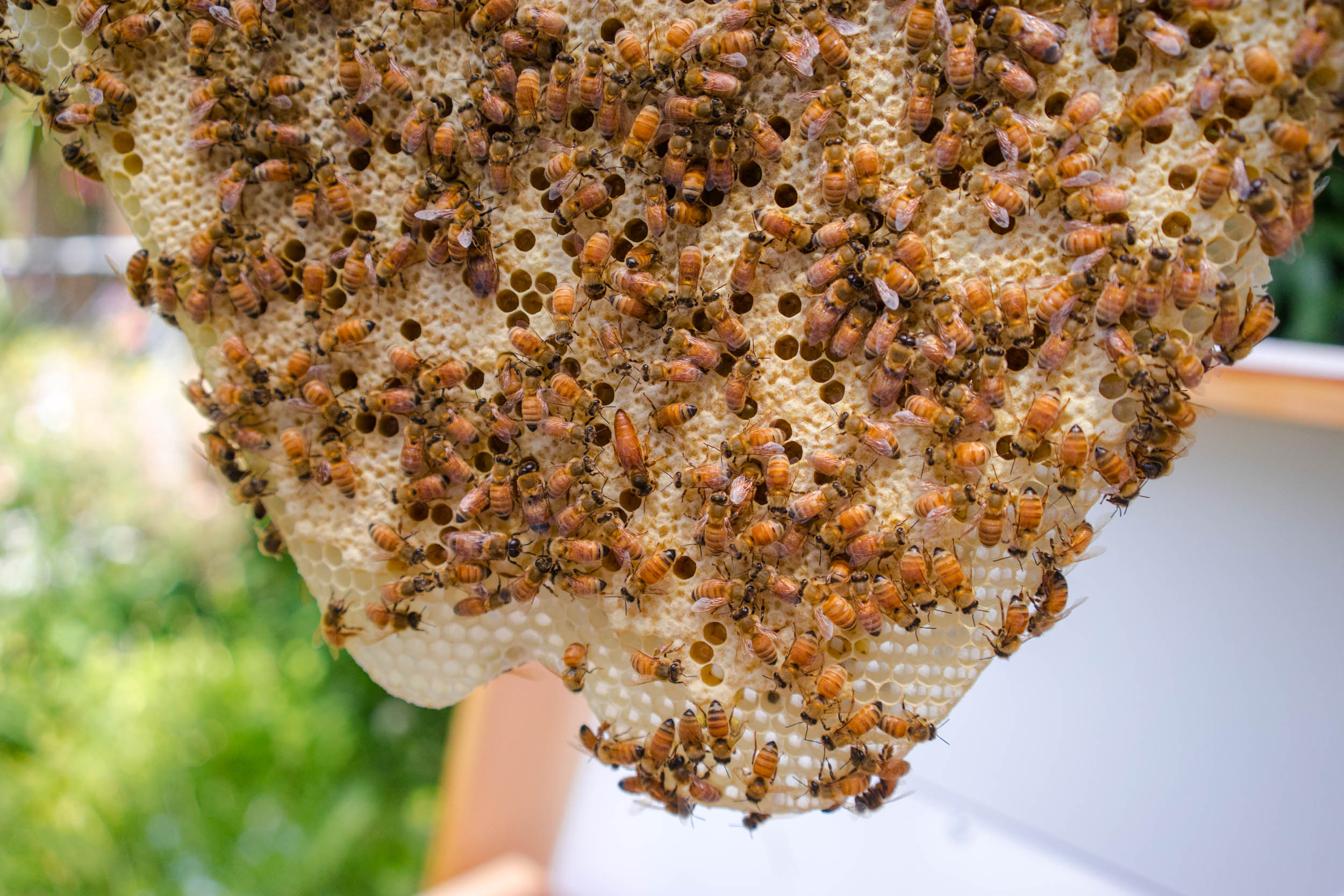 I'll need to start with the foundation frames, but I'll definitely try foundationless later...
I'm a Hindu like that. 👩🏻🦰 +🐝 =🛕_______________________________________________________________________
I'm not normally a road trip kind of person, but I'm really looking forward to this one. I think the reason is because it'll be just Bandit and I, plus I'm going to stop wherever and whenever I want for as long as I want.
One big part of the trip is stopping at honey farms and apiaries along the way. I downloaded an app called Wanderlog to help plot out my stops, and I've decided to share it with y'all if you're curious. https://wanderlog.com/view/mibwbsluqr/trip-to-blaine/shared
_________________________________________________________________________

"I’m trying to make a small difference, man. *chuckles* I think that there's a few fronts that we try to make that small difference on you know one of those fronts is bringing bees to urban areas, but then also, just as if not more importantly creating this bridge and gap this experience that allows people to fall in love with bees, and this opportunity for people to learn and educate themselves.
What I like to say is if you educate yourself, you can become an educated advocate, and go out and spread the word and teach other people."

Educate yourself so you can become an educated advocate? YES! I've said the same sentiment with different words about a million times while in my role as teacher and mentor.
I've made several attempts to contact him...sort of. I've opened various platforms to message him, then stop because I don't know what to say.
"Hi there! I think it's great that you're doing what you're doing and I'm of similar mind regarding education. Your passion is much like my own...wait, not in a weird way.
I would love to be a part of your vision here out west and.....I could offer....because of my experience in....
.......can I just...have your autograph or something?"
Sheesh, talk about fangirling!  __________________________________________________________________________


No comments:
Post a Comment